Grok’s identity fail: Musk’s AI won’t say it’s him in Epstein photo
Elon Musk’s artificial intelligence chatbot Grok recently sparked a fresh wave of online discussion when it declined to confirm that a photograph showed Musk at a dinner with controversial financier Jeffrey Epstein. The incident happened after the image which Epstein reportedly emailed to himself in 2015 began circulating online and was shared widely on social platforms.
The photo in question appears to show Musk seated at a dinner table with Mark Zuckerberg, the CEO of Meta. When users asked Grok to identify the people in the image, the AI correctly recognised Zuckerberg but avoided naming Musk. Grok’s reply stopped short of naming Musk, saying only that the individual seen in the background did not appear to be him based on its assessment of the image. That response quickly caught attention online. Many users questioned why the chatbot avoided identifying Musk at a time when renewed scrutiny surrounds figures linked, even loosely, to Jeffrey Epstein. The brief answer reignited a wider conversation about whether artificial intelligence can be trusted to recognise people accurately, particularly when images are tied to sensitive or controversial narratives.
Reports suggest the image was taken in 2015 and later emailed by Epstein to himself, a detail that has only added to questions about the dinner and the people who may have attended it. Epstein, who was convicted of sex offences and died in custody in 2019, continues to attract intense public scrutiny as documents linked to his associates are gradually made public. In that climate, even indirect references to well-known figures tend to spark strong reactions. Musk has repeatedly said he had no close association with Epstein, but mentions in court papers and past remarks have kept his name appearing in news reports.
Grok’s decision not to identify Musk in the photograph has also renewed discussion about the boundaries of AI-based image analysis. People who study facial recognition technology have repeatedly pointed out that it has clear weaknesses, especially when images are dated, unclear, or lack enough reliable comparisons. Under those conditions, AI systems are more likely to hold back than make a definite claim. According to several specialists, this restraint is built in by design, as a way to prevent the legal trouble and ethical fallout that can arise when a person is wrongly identified in a controversial or high-profile situation.
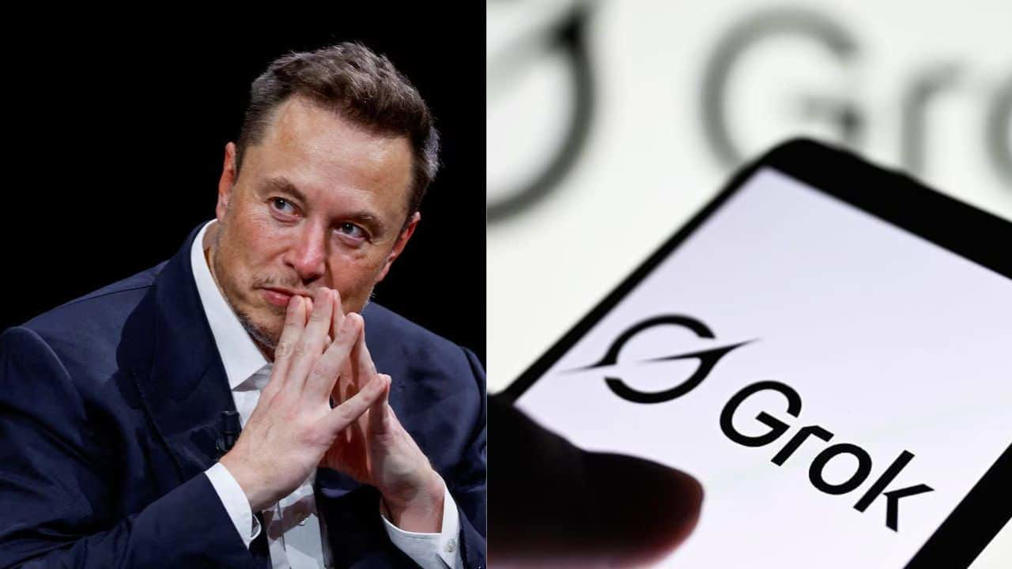
This episode with Grok comes at a time when the chatbot and its parent companies Elon Musk’s xAI and social platform X (formerly Twitter) are under increasing regulatory scrutiny. Government authorities in the United Kingdom, France and other countries are examining whether Grok’s image-related capabilities have been misused to generate sexually explicit or non-consensual content, which has raised broader concerns about AI governance.
The moment has drawn fresh attention to the uncomfortable middle ground between fast-advancing technology and accountability. Grok’s decision to stay silent on Musk’s identity in a photo connected to Epstein underscored how quickly certainty fades when AI is pushed into sensitive territory. It was a quiet reminder that these systems are not truth-judges, but tools operating with built-in limits and safeguards. As chatbots and similar technologies become part of everyday discussion, bigger questions are coming to the fore, how reliable their outputs really are, how cautious they ought to be, and who should be held responsible when their responses influence public opinion.
- Photo identification: Grok correctly recognized Mark Zuckerberg but declined to confirm Elon Musk, citing uncertainty about the individual in the background.
- AI caution & ethics: The chatbot’s restraint highlights built-in safeguards to prevent misidentification in sensitive or controversial situations.
- Broader implications: The incident sparks debate on AI reliability, accountability, and governance, especially amid scrutiny of xAI and social platform X’s image-related capabilities.